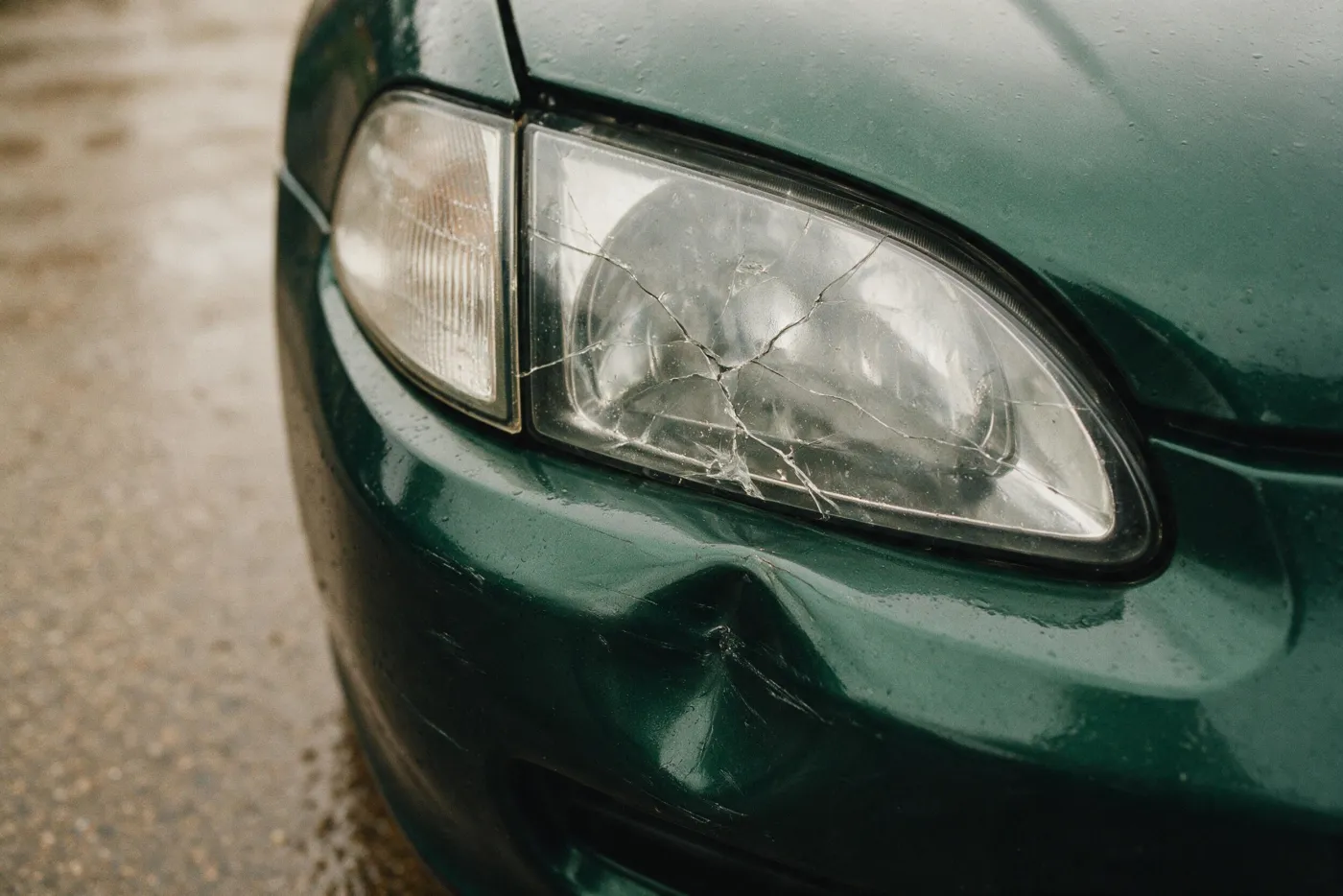
The sequence of steps taken immediately after a road traffic accident can decide whether you will later be able to prove the damage suffered and the responsibility for causing it.
The success of a compensation claim depends largely on what you are able to prove, which is why it is important that all available evidence is secured and preserved immediately: the police documentation, the European Accident Statement, photographs, details of the participants and witnesses, medical documentation and evidence of the damage suffered.
Steps to take
- Call the police and, if anyone is injured, the emergency services. When the circumstances of the accident allow, a European Accident Statement may be completed instead of a police on-site investigation. Keep all the documentation drawn up at the scene, as well as the details of the other participants and any witnesses.
- Photograph as much as possible. Photograph the position of the vehicles, the damage to the vehicles and other items, the registration plates, the marks on the road surface, the traffic signs and signals and the accident scene itself. Take the photographs from several angles and, where possible, before the vehicles are moved.
- See a doctor if you are injured or feel any discomfort. Keep the complete medical documentation, doctors' reports, findings, scans, referrals, certificates, documentation on examinations, therapies, procedures and the further course of treatment. Also keep the receipts for medicines, private examinations, rehabilitation and other treatment costs.
- Document all material damage and every expense incurred because of the accident. Keep the receipts and documentation for towing and storage of the vehicle, the assessment and repair of the vehicle, as well as evidence of damage to or destruction of other items that were in the vehicle.
- Document the consequences the accident had on your work and earnings. If, because of your injuries, you were temporarily unable to work or suffered a loss of earnings, keep the sick-leave certificates, confirmations and other documentation from your employer from which the period of absence and its financial consequences can be established.
- Keep all the documentation in one place. The police documentation or the European Accident Statement, medical documentation, photographs, receipts, assessments, documentation on the repair of the vehicle, documentation from your employer and all correspondence with the insurance company may be relevant when framing and proving the compensation claim.
To whom is the compensation claim submitted?
You can submit the compensation claim yourself or through an attorney-in-fact, and as a rule it is submitted to the insurance company with which the vehicle responsible for the road traffic accident was insured under motor third-party liability insurance.
The available documentation proving responsibility, the damage suffered and its amount is submitted together with the claim.
If you are represented by a lawyer, the lawyer submits the compensation claim on your behalf, collects and submits the necessary documentation, communicates with the insurance company and takes further legal steps to obtain compensation for the full extent of the damage.
Before you sign an agreement
The insurance company's first offer need not be the final one. If you consider that the amount offered does not correspond to the damage actually suffered, you are not obliged to accept the offer; instead, you can ask for it to be reconsidered and file an objection within the time allowed.
Particular care should be taken when accepting the offer concludes an out-of-court settlement agreement. By signing such an agreement, the parties' mutual rights and obligations regarding compensation are settled, and the injured party waives the right to any further claims arising from the same harmful event.
What can I claim as compensation?
Depending on the consequences of the injury, compensation may cover non-pecuniary and pecuniary damage: compensation for physical pain and fear suffered, reduced life activity and disfigurement, where the conditions for this are met, as well as treatment costs, lost earnings and other provable pecuniary damage.
What if the insurance company offers less compensation than I am entitled to?
If the insurance company, even after your objection, stands by an offer you consider inadequate, you are not obliged to accept an out-of-court settlement.
By not accepting an out-of-court settlement you retain the right to pursue your claim through the courts, by filing a claim in civil proceedings, in which the basis of liability, the existence and extent of the damage suffered and the amount of compensation to which you are entitled will be established.
In court proceedings the amount of damage can be established by taking appropriate evidence, including medical and other documentation, the examination of the parties and witnesses, as well as expert examination by court experts of the relevant profession.
It is not advisable to wait before commencing proceedings. The passage of time can make proof considerably more difficult, traces and documentation can become harder to obtain, witnesses may forget details, and establishing the causal link between the road traffic accident and particular consequences can become more complex.
Note. The content of this site is for information only and constitutes general legal information. It is not legal advice, a professional opinion or a recommendation for action in a specific matter. Sending a message through the site does not in itself create a lawyer and client relationship. More in the terms of use.